Do Ice Makers Use a Lot of Electricity?

No. Most countertop ice makers use relatively little electricity compared with larger kitchen appliances. Their running cost is usually modest when they are used for only a few hours each day.
Quick Answer: How Much Electricity Does an Ice Maker Use?
A typical countertop ice maker has a rated power of about 100–200 watts. A 150-watt model running for two hours would use approximately 0.3 kilowatt-hours (kWh) of electricity.
Ice Maker Wattage vs. Power Consumption
Ice maker wattage tells you how much power the machine draws while operating. Electricity consumption is measured in kilowatt-hours.
Use this formula to estimate consumption:
Wattage ÷ 1,000 × operating hours = electricity consumption in kWh
For example:
150W ÷ 1,000 × 3 hours = 0.45 kWh
To estimate the electricity cost, multiply the result by your local electricity rate:
Electricity consumption × electricity rate = estimated cost
For example, at $0.17 per kWh:
0.45 kWh × $0.17 = about $0.08 per day
Do Countertop Ice Makers Use a Lot of Electricity?
Generally, no. Countertop ice makers are compact and designed to make ice in short cycles. They do not need to cool a large refrigerated compartment continuously like a refrigerator or freezer.
However, leaving a countertop ice maker running all day will use more electricity than producing the amount of ice you need and then turning it off.
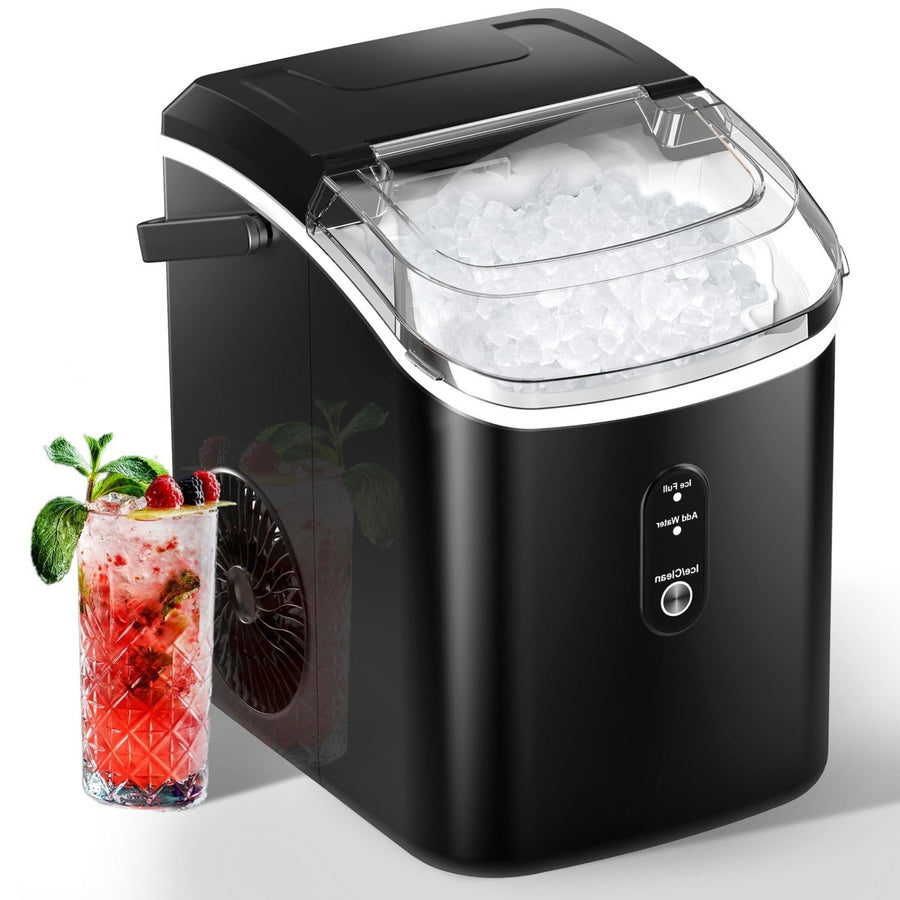
Kismile Nugget Ice Maker Power Consumption Example
The Kismile Z5825NB is a popular countertop nugget ice maker that produces up to 34 pounds of ice per day. Its listed wattage is 136 watts.
Assuming the machine draws 136 watts throughout the selected operating time, its estimated electricity use would be:
| Operating Time | Estimated Daily Use | Estimated Monthly Use | Estimated Monthly Cost* |
|---|---|---|---|
| 1 hour per day | 0.136 kWh | 4.08 kWh | $0.69 |
| 2 hours per day | 0.272 kWh | 8.16 kWh | $1.39 |
| 4 hours per day | 0.544 kWh | 16.32 kWh | $2.77 |
*Estimated at $0.17 per kWh. Actual electricity use and cost will vary with operating conditions and local electricity rates.
These calculations show that a compact countertop model can produce ice for everyday drinks without adding a large amount to the monthly electricity bill. You can view the 136-watt Kismile countertop nugget ice maker to check its full specifications and features.
What Affects Ice Maker Power Consumption?
- Longer operating time increases total power consumption.
- A warm room or high water temperature can make ice production take longer.
- Blocked ventilation may reduce cooling efficiency.
- Mineral buildup and dust can make the machine work harder.
- Producing more ice naturally requires more operating time.
How to Reduce an Ice Maker’s Electricity Use
- Make only the amount of ice you need.
- Use cool water when allowed by the product instructions.
- Keep the machine away from direct sunlight and heat-producing appliances.
- Leave enough space around the ventilation openings.
- Clean the machine and air vents regularly.
- Turn it off when it will not be used for an extended period.
The Bottom Line Before You Buy
Countertop ice maker power consumption is generally manageable for everyday household use. Instead of looking only at wattage, consider the machine’s ice output, operating time, size and the type of ice it produces. If you’re still deciding which style fits your home, compare countertop vs. undercounter ice makers before choosing a model.
A properly sized model can provide enough ice without requiring unnecessary operating time. If you want convenient nugget ice with modest estimated electricity use, you can order the Kismile Z5825NB countertop nugget ice maker directly from Kismile.

Frequently Asked Questions
1. What is the typical ice maker wattage?
Many countertop ice makers are rated between approximately 100 and 200 watts. Larger machines may have different power requirements, so always check the specifications of the exact model.
2. Is it expensive to run an ice maker?
Usually not for occasional household use. The actual cost depends on the machine’s wattage, daily operating time and local electricity rate.
3. Can I leave a countertop ice maker on all day?
Check the product instructions first. If you do not need continuous ice production, turning the machine off after making enough ice can reduce unnecessary electricity use.
4. Does an ice maker use electricity when it is not making ice?
Some models may still use a small amount of electricity for controls, indicator lights or standby functions. Unplugging or switching off the machine during extended periods of non-use can avoid standby consumption.
Conclusion
For most households, the answer is no. A countertop ice maker with suitable wattage and ice capacity can provide convenient ice without creating a large electricity expense, especially when it is operated only when needed.
To compare models by ice type, size and daily production capacity, explore Kismile’s complete ice maker collection and choose the option that best matches your everyday needs.