Does an Air Fryer Need Oil? When to Add It

No. An air fryer can cook food without added oil because it circulates hot air around the food. A little oil can help fresh potatoes, vegetables, and breaded foods brown more evenly. Foods that already contain oil often need no extra.
Do You Need Oil in an Air Fryer for Every Food?
Whether to add oil depends on the food and how it was prepared. Check packaged-food instructions first, especially for frozen items.
| Food | Extra oil? | What to do |
|---|---|---|
| Fresh-cut fries or potato wedges | Usually helpful for browning | Dry the cut potatoes, then toss with a little oil. |
| Fresh vegetables or plain tofu | Often helpful for surface texture | Coat lightly and spread out so air can circulate. |
| Lean meat or fish | Optional, depending on the recipe | Use a thin brushed layer if the recipe calls for it. Count any oil already in the marinade. |
| Homemade breaded foods | A light coating can help | Lightly brush or mist the attached breading to reduce dry, floury patches. |
| Frozen fries or snacks already prepared with oil | Often unnecessary | Follow the package directions; do not assume every frozen food is pre-fried. |
| Fatty foods, such as bacon or skin-on chicken | Often unnecessary | These foods release their own fat as they cook. |
For preparation and cooking guidance, see our guide to cooking frozen food in an air fryer. For cooked leftovers, follow our air fryer reheating guide.

Where Do You Put Oil in an Air Fryer?
Apply cooking oil to the food before loading the air fryer. Do not pour oil into the drawer or create a pool in the bottom of the cooking pot.
- Small pieces: Toss vegetables, tofu, or fresh-cut potatoes with oil in a mixing bowl.
- Larger pieces: Brush a thin layer onto meat or fish.
- Breaded foods: Lightly mist or brush the coating without knocking it loose.
If your appliance instructions call for greasing the rack or crisper plate to prevent sticking, apply only a thin film. Never fill an air fryer with oil as you would a deep fryer.
How Much Oil Do You Put in an Air Fryer?
Use enough oil to leave a light, even sheen on foods that need it. There should be no oil pooling in the bowl after tossing. The amount depends on the quantity of food, its surface area, and any fat already present.
As one recipe example, 12 ounces (about 340 g) of halved Brussels sprouts can be tossed with 2 teaspoons (10 mL) of oil. Other vegetables and portion sizes may need a different amount. Follow the measured quantity in your recipe, then check that the oil is evenly distributed.
A spoon gives you better control than pouring straight from the bottle. A few sprays are harder to measure because sprayers dispense different amounts.

Can You Use Olive Oil in an Air Fryer?
Yes. Olive oil can be used in an air fryer. Choose the type according to the cooking temperature:
- Refined or light-tasting olive oil: Generally has a higher smoke point and milder flavor than extra-virgin olive oil, making it a useful choice for hotter cooking.
- Extra-virgin olive oil: Can work for many recipes, but its smoke point varies with the oil. There is no single temperature limit that applies to every bottle.
Follow any cooking-temperature guidance on the oil label and your appliance instructions. Refined avocado oil or another cooking oil suitable for the recipe’s temperature is also an option.
Can You Use Olive Oil Spray in an Air Fryer?
Yes. A refillable pump mister containing olive oil can help spread a small amount evenly over food.
For packaged cooking sprays, check the ingredients and your appliance’s care instructions. Some nonstick sprays contain additives that may damage certain basket coatings.
Food Still Not Crispy? Check Before Adding More Oil
Oil cannot make up for wet surfaces or an overcrowded basket. If food is pale or soft, check these common causes:
- Wet ingredients: Pat washed vegetables, soaked potatoes, or marinated foods dry as the recipe directs before oiling.
- Crowding: Leave room for air to circulate. Cook in batches when needed.
- Uneven exposure: Turn or shake the food as directed so the same side is not facing down throughout cooking.
If the air fryer starts smoking, stop cooking and let it cool before checking for excess grease or old food residue. Follow the appliance’s troubleshooting instructions. Our air fryer cleaning and maintenance guide covers routine care.
See How Your Food Is Browning
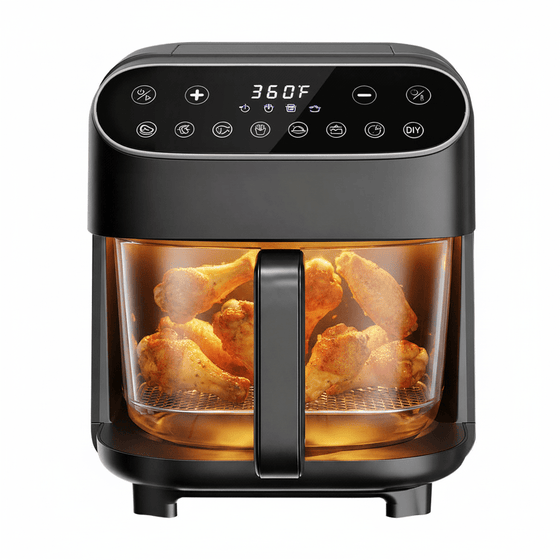
The Kismile 5-Quart Glass Air Fryer 12420KAF0 lets you watch the outside of your food brown through its clear cooking pot. That is useful when you are trying a lighter coating of oil and want to check the color without repeatedly opening the basket.
It has an uncoated borosilicate-glass pot, a 304 stainless steel rack, and eight cooking presets. The removable cooking pot and rack are dishwasher-safe.
Frequently Asked Questions
What Happens If You Don’t Use Oil in an Air Fryer?
Fresh potatoes or breaded foods may brown less evenly and have drier surfaces. Delicate foods may also stick more. The effect depends on the food and any fat it already contains.
Can I Cook in an Air Fryer Without Oil?
Yes. Choose a recipe designed for cooking without added oil. Ingredients can still release their own fat, so the finished meal is not necessarily fat-free.
What Is the Downside of Air Fryers?
Limited basket space can mean cooking in batches, and lean foods can dry out if overcooked. Air-fried food also does not always match the texture of deep-fried food. Our guide to whether an air fryer is worth buying explains the practical trade-offs.
Should I Add Oil Before or After Preheating?
If preheating is required, preheat the air fryer first, then load the food you have already coated with oil. For recipes that start in a cold air fryer, load the prepared food before switching it on. Do not spray oil into a hot or running appliance.
Can Oil in an Air Fryer Cause a Fire?
Yes, if oil or grease overheats. Excess oil and grease buildup increase the fire risk, so avoid adding too much and clean away grease after use.